Hispanolaval - Association Hispanophone de Laval
4.5 ★★★★★ 10+ reviews
Business Contact
Steve Edwards
Hispanolaval - Association Hispanophone de LavalContact Information
Hispanolaval - Association Hispanophone de Laval
1450 Bd Pie-X, Laval, QC H7V 3C1, Canada
Get Directions
1450 Bd Pie-X, Laval, QC H7V 3C1, Canada
Get Directions
Phone: (514) 447-9984
Hours: Show
Web: hispanolaval.com
Email: info@hispanolaval.com
Facebook Profile: Visit
Twitter Feed: Visit
Google Maps: Visit
Edit: Edit or Remove
Business Description
In 1993, a group of Spanish-speaking residents in the city of Laval felt the need to create a Hispanic organization. At that time, the Hispanic population in Laval was increasing, with 1,510 residents having Spanish as their mother tongue in 1991, which increased to 3,155 in 1996. However, the population decreased to 2,645 in 2001. The countries of origin for these immigrants from Latin America were initially Chile, Peru, El Salvador, and Colombia, but this distribution changed in the early 2000s, with Salvadorans being the largest group followed by Peruvians, Chileans, and Mexicans. The immigrants desired a place where they could communicate in their own language, exchange ideas, fulfill their dreams, and discuss their problems in order to integrate harmoniously into their new geographical, economic, cultural, and linguistic environment. Thus, on January 28, 1994, the Association Hispanophone de Laval (AHL) was created as an organization for integration and cultural and linguistic interaction between the Hispanic and Quebecois communities. The association organized various events such as coffee meetings, conferences, interviews, dances, festivals, and acts of solidarity with Latin American villages affected by natural disasters. The success of this organization demonstrates its ability to reconcile integration into the adopted society with the preservation of Hispanic culture and the Spanish language.
Founded: 1994
Industry
Education
Education
Engaged in:
Language School
Language School
ISIC Codes
8549
8549
Questions & Answers
Q1
How long has Hispanolaval - Association Hispanophone de Laval been in business?
Hispanolaval - Association Hispanophone de Laval has been in business for around 32 years.Q2
What is the phone number for Hispanolaval - Association Hispanophone de Laval?
The phone number for Hispanolaval - Association Hispanophone de Laval is (514) 447-9984.Q3
Where is Hispanolaval - Association Hispanophone de Laval located?
Hispanolaval - Association Hispanophone de Laval is located at 1450 Bd Pie-X, Laval, QC H7V 3C1, Canada.Q4
What days are Hispanolaval - Association Hispanophone de Laval open?
Hispanolaval - Association Hispanophone de Laval is open Sat 10 AM–12 PM; closed Mon–Fri, Sun.Q5
Is there a primary contact for Hispanolaval - Association Hispanophone de Laval?
You can contact Hispanolaval - Association Hispanophone de Laval by phone using number (514) 447-9984.Q6
What is the web address (URL) for Hispanolaval - Association Hispanophone de Laval?
The website for Hispanolaval - Association Hispanophone de Laval is hispanolaval.com.Additional Businesses at this Address
1450 Bd Pie-X, Laval, QC H7V 3C1, Canada
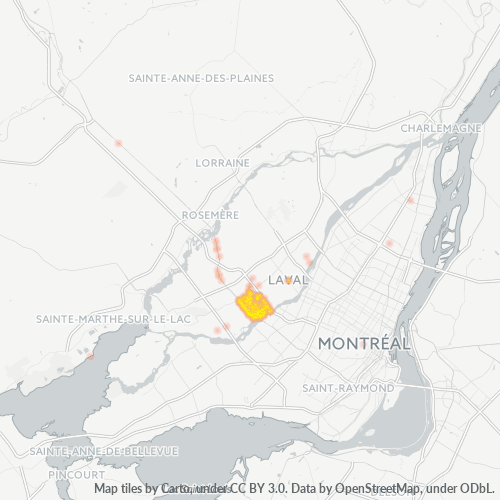
Businesses in Postal Code H7V
Businesses in H7V: 3,987
Population: 23,573
Categories
Shopping: 18%
Professional Services: 12%
Other: 69%
Price
Inexpensive: 42%
Moderate: 34%
Expensive: 13%
Very Expensive: 11%
Other: 0%
Area Codes
450: 87%
514: 12%
Other: 1%
Neighborhoods
Chomedey: 26%
Laval: 24%
Laval-des-Rapides: 16%
Laval-des-rapides: 6%
Saint-Martin: 18%
Other: 11%
Stats and Demographics for Postal Code H7V
Gender
Female: 51%
Male: 49%
Other: 0%
Write a Review
Review Details
★★★★★No reviews on AllBiz4.5★★★★★10+ reviews elsewhere
0 Reviews
Be the first to write a review.